

December 16, 2025
Water from Owens Valley for Los Angeles Water Supply Includes Groundwater! Tribes Want it Back!
Prepared by Andrew Stone, Hydrogeologist (andrewstonewater(at)gmail.com)
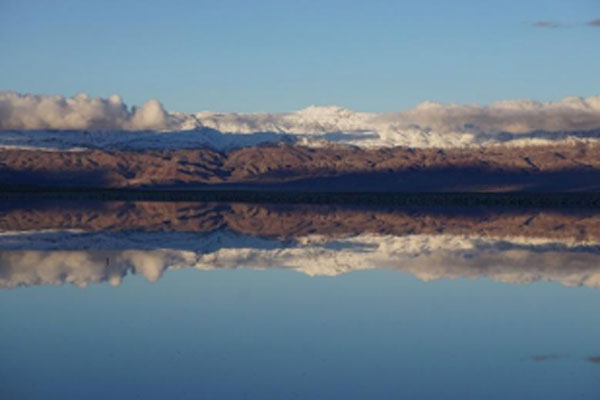
This Owens Lake picture has a groundwater backstory! | photo credit: Andrew Stone
Looks are deceiving! The placid reflections in this photograph of Owens Valley Lake disguise the realities of the negative economic, social and ecological results of “forced” water transfers from Mono Basin and Owens Valley. It is not generally recognized that groundwater is a significant component of the “stolen” water. Since the early 20th century, the Owens Valley and later, the Mono Lake hydrologic system have been systematically commandeered, and their streams, lakes and wetland ecosystems east of the Sierras have been continually deprived of adequate water.
The Owens River Valley is on the northeastern foothills of the Sierra Nevada mountains. Geologic faults and volcanic activity formed the Mono Lake basin over the last 5 million years. [LINK]
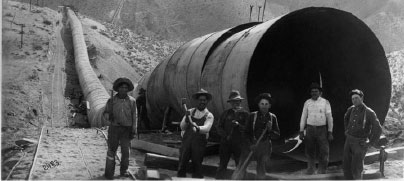
For the last 100+ years vast quantities of water have been diverted via pipelines, siphons, canals and aqueducts for water supply 200+ miles away in Los Angeles. Groundwater contributes to the flow of the diverted headwater streams and in addition, groundwater in the Owens Valley hydrologic system is also accessed by wells owned by the City of Los Angeles. In the 1940s, tunnels were constructed north from Owens Valley to the Mono Basin and 1970 a second aqueduct was built that doubled the capacity to divert water south to LA.
An October 18th , 2025, article by the Mojave Desert, journalist Ian James, published in the Los Angeles Times, reports that leaders of the Native tribes in the Owens Valley are asking the city to take less water because current groundwater pumping has dried up the few existing springs and negatively affected meadow vegetation. According to the L A Times article, the Owens Valley “once had so many springs, streams and wetlands that the Paiute and Shoshone people called their homeland Payahuunadü, (the land of flowing water.) Today, tribal members say LA’s extensive use of water has transformed the landscape, desiccating many springs and meadows, killing native grasses and altering the ecosystem.”
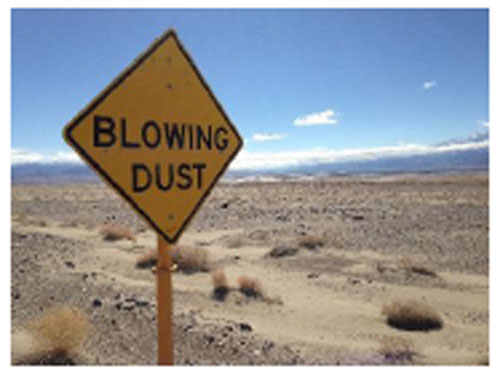
Since 1941 when flow to Mono Lake was diverted, the lake’s surface area has been reduced by over 60%, the lake level has dropped by 45 feet, and the lake salinity has doubled. In the 1970s and 1980s, groundwater pumping in Owens Valley also impacted groundwater dependent natural vegetation north of Owens Lake. Lowered lake levels have exposed dry lake beds at Mono Lake and Owens Valley Lake. Wind blowing the dust from the exposed lake beds causes toxic air quality challenges. Following a 1979 lawsuit by Inyo County and environmental organizations, the City of LA has been required to install dust suppression systems that spray water on the dry lakebed.
It seems ironic that some of the groundwater from wells, and rerouted flow from streams, that formerly maintained vibrant Owens Valley ecosystems, now has to be used for suppressing dust caused by diverting water to Los Angeles.
See the links below for much more information about this hydrological engineering controversy.
The information in this article shows just the tip of a very big (125 year old hydrological & political) iceberg!
Original aqueduct construction: https://waterandpower.org/museum/Construction_of_the_LA_Aqueduct.html
Mono Craters Tunnel: https://www.monolake.org/today/groundwater-exports-benefit-los-angeles-impact-mono-lake/
1970 Aqueduct: https://waterandpower.org/museum/A_Second_Aqueduct.html Toxic Dust: https://www.plantsciences.ucdavis.edu/news/eviner-nas-owens
2025 LA Times report: Ian James reports for the Los Angeles Times October 18, 2025, with photography by Carlin Stiehl
LA Dept of Water & Power – annual report: https://www.ladwp.com/sites/default/files/2024-06/2024%20Final%20Owens%20Valley%20Report.pdf